A New Mental Model for Defi Treasuries
The Defi bull market, started by COMP liquidity mining in Summer 2020, has turned many Defi protocols into rapidly growing revenue monsters. You would assume

The Defi bull market, started by COMP liquidity mining in Summer 2020, has turned many Defi protocols into rapidly growing revenue monsters. You would assume

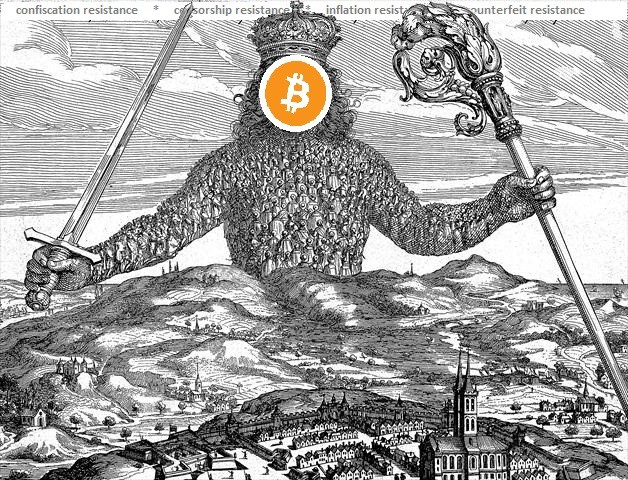
The concept of the intolerant minority is frequently misapplied in Bitcoin. Bitcoin is less defended by an intolerant minority than it defends against an intolerant minority.

Howdy! I just want to catch you up on some of the work Su and I have been publishing outside of UCC.
I went on the Unhashed Podcast to discuss the findings from our recent paper on Bitcoin’s security model. If you are looking for a less formal entry point to the topic of Bitcoin’s security, or have already read the paper and want to hear more, this show is for you.

Su and I have recently joined Deribit, a cryptocurrency futures & options exchange. At Deribit, we will build out a new research publication called Deribit Insights, following in the footsteps of excellent publications like BitMEX Research, Circle Research (now closed down), and Binance Research. We retain editorial control and will publish one new report every week.

In this paper, we introduce our model of Bitcoin’s security, which depends on a surprisingly small number of factors. We find that Bitcoin can tolerate a high incentive to attack today, but the declining block subsidy poses a substantial risk for the future.

Dydx is the Ethereum-based onchain crypto derivatives platform that’s been in development for some time now. As they just launched to the public today, I thought I would do a quick review.
We value bitcoin using a high-level approach and highlight three significant trends that could lead to increased demand for a neutral, private money in the future.
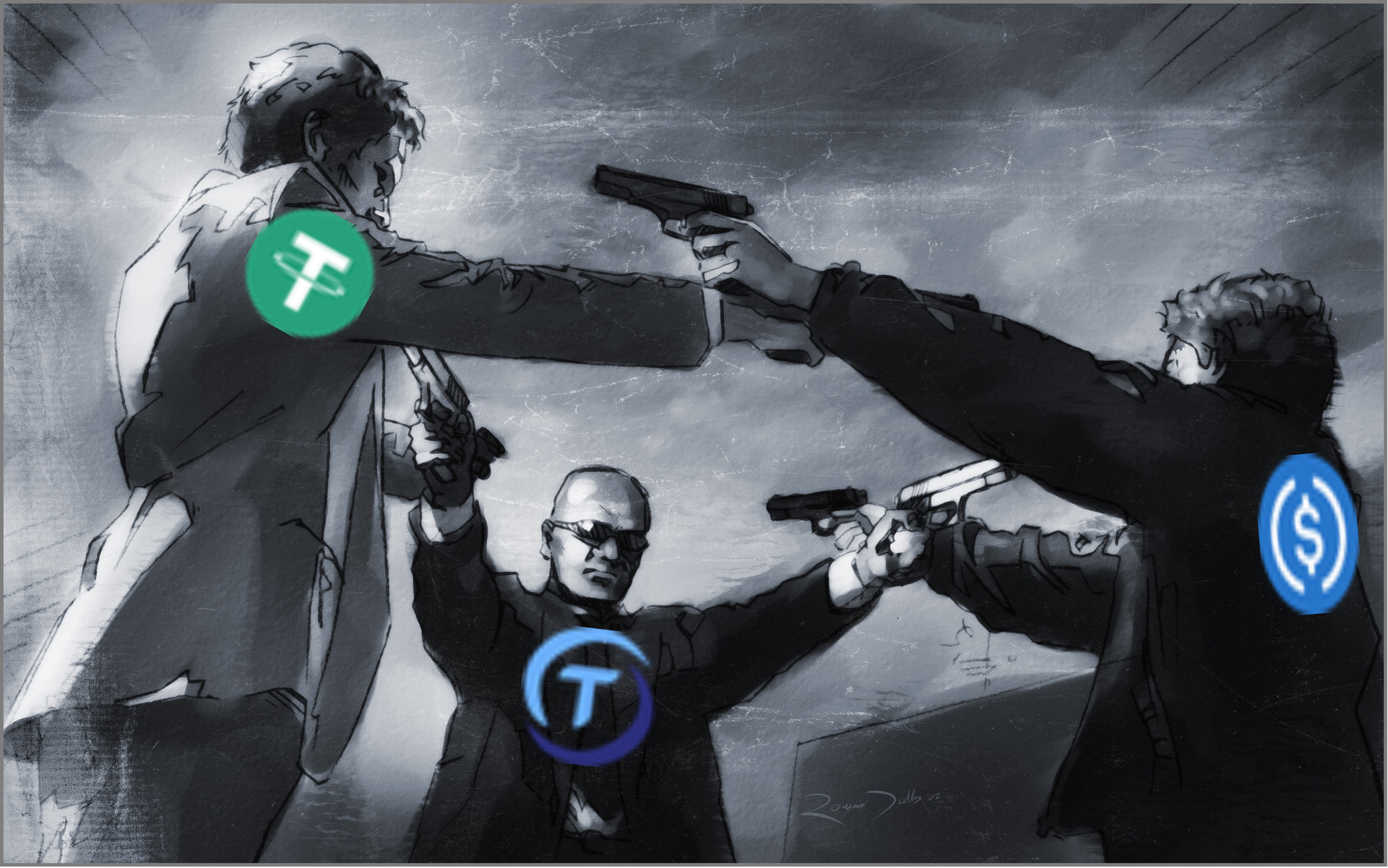
So far, dollar backed stablecoins like Tether’s USDT or Circle’s USDC don’t pay any interest to holders of their coin. We think that is about to change in 2019.

When cash is gone, where will you turn to transact with a basic level of privacy? What money do you hold when negative interest rates start eating away at your bank account?

It seems to be a foregone conclusion these days that the market for money is winner-take-all. We look at several challenges for Bitcoin that work as counterforces to such consolidation into one money.

When Grin launched in early January after years of anticipation, it faced material pushback from prominent Bitcoiners who labeled it a “VC coin” and compared it to offerings from the 2016/18 ICO era. We ask: What constitutes a fair launch?

In the attempt to dismiss the space as a whole, MSM commentators often state that cryptocurrency is nothing more than a number on the screen intended to be bet on. What if there was a way to differentiate between use value and speculative value?

We will take a look at how professional arbitrageurs expand and contract the supply of a stablecoin based on the current demand of the market, how Dai’s model is different and why the lack of a professional arbitrage model makes Dai fundamentally unscalable.

What do people mean when they say that regulatory clarity will usher in a bull market?

Is the herd coming?

Consider me a skeptic when it comes to custody’s long-term value proposition for crypto as a whole. Custody without insurance is security theatre — you are simply swapping out one holder of your private keys for another.

Until now, it was impossible to have strong property rights in places with a weak local government. Bitcoin does not depend on the existing system in any way and can give us the highest form of property rights.
The bitcoin protocol automates the contract agreed upon on the social layer, while the social layer determines the rules of bitcoin, based on the consensus of its users.

I tested the first plug-and-play node for Bitcoin and the Lightning Network. Is it as easy to set up and use as promised?

Discussions about Bitcoin often start from the presumption that fiat money is terrible and against the will of the people. We think a discussion about money and Bitcoin should start by acknowledging both — the good, and the bad — of the fiat system.

A series of recent issues with the exchange leads me to believe that they have a hard time acting ethically once it gets in their way of making more money.

Here’s a theory for you: Tether is exiting — and that’s a good thing.
In this piece, we demonstrate how several recent reports about Bitcoin’s exposure to Tether have been grossly exaggerated. We then assess how exposed to both solvency and liquidity risks is Tether. We finally conclude that Bitcoin should be robust to Tether-related shocks.

The point of this essay is to show how value flows from users to shareholders in both companies and decentralized protocols and give the reader a mental model for making sense of profit share tokens.

This essay is a thought experiment to understand which types of tokens (interchangeable with “cryptocurrencies”) can and cannot accrue value.

There are many similarities between Bitcoin and the universalizing religions, and much for Bitcoin to learn from them.
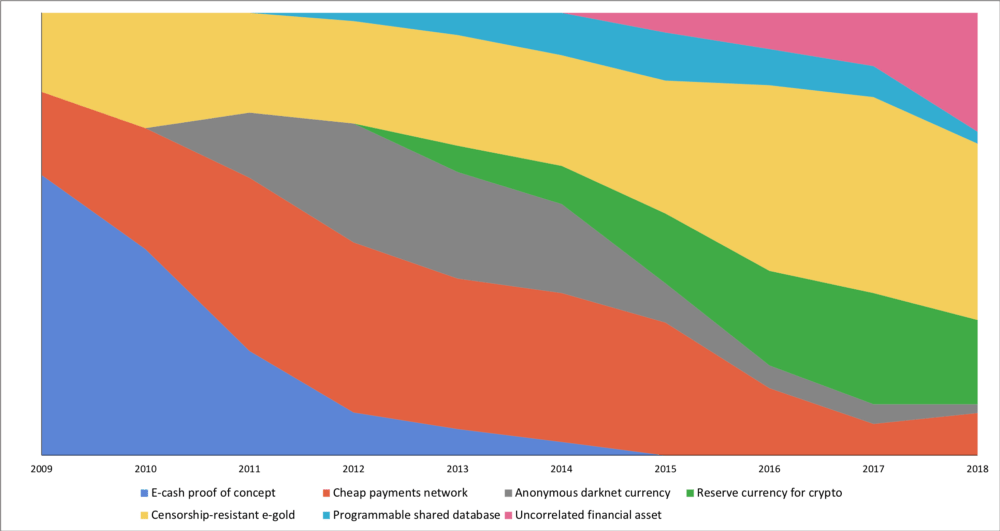
Perhaps the most enduring source of conflict within the Bitcoin community derives from incompatible visions of what Bitcoin is and should become.

Even though batched transactions make up an average of only 12% of all transactions, they move between 30%-60% of all Bitcoins, at peak times even 70%.

I look at potential irregularities in the Ethereum ICO and what that means for the risk of being deemed a security.